MacSync: From ClickFix to Data Theft — Flash Hunt
Case Context
A Flash Hunt on Threat Hunting Labs — the platform’s rapid, single-session investigation format, distinct from the guided multi-hour cases. Per the platform’s own public listing: a macOS drill focused on Base64 pipe-to-shell execution, AppleScript shell orchestration, credential and developer-artifact staging, HTTP archive upload, cleanup verification, and behavior-first detection design.
Threat Hunting Labs has a strict no-public-writeup policy on active labs to protect scoring and leaderboards for other users, so this page is intentionally an overview: what I did and what I found, not the queries or the specific answers that got me there.
A macOS workstation alert traced a ClickFix-style lure (a fake installer page with a copy-to-Terminal prompt) through to a Base64-encoded shell execution chain, AppleScript (osascript) orchestrating dozens of shell children, credential and developer-secret staging (keychain, cloud, and SSH material), an archived HTTP upload, and post-exfiltration cleanup — all within roughly a minute, with no persistence established anywhere.
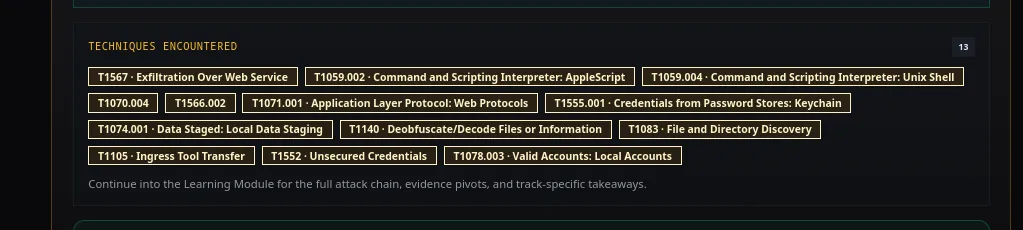
Techniques Encountered
Thirteen MITRE ATT&CK techniques surfaced during the hunt, spanning phishing-style delivery, macOS-native scripting, credential access, and web-based exfiltration:
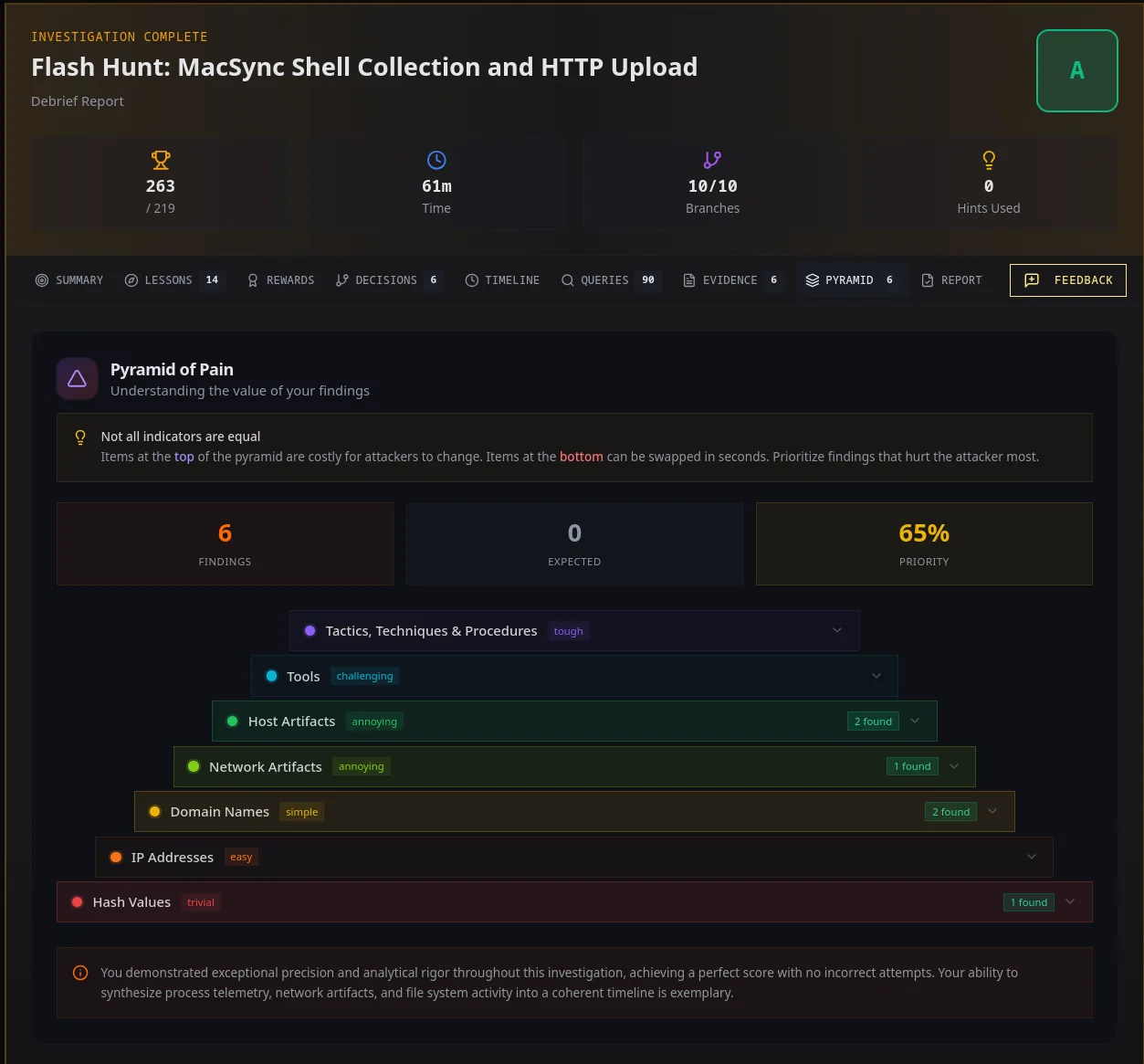
Prioritising Findings — Pyramid of Pain
Six findings came out of the hunt, weighted by how costly each is for the attacker to change:
What I Practiced
- Reconstructing a ClickFix-style social-engineering chain from a lure page through to shell execution, without direct telemetry on the clipboard/paste step itself
- Tracing AppleScript (
osascript) as the parent orchestrating a large fan-out of shell children on macOS - Scoping keychain, cloud credential, and developer-secret exposure for containment and rotation, distinct from confirming the data was actually used
- Separating what telemetry proves from what it merely suggests — several decision points hinged on not overstating confirmed impact
- Building detection logic generalised enough to catch the technique class (decode-and-execute, automation-driven collection, archive-then-upload), with legitimate MDM/backup-tooling exclusions, rather than matching this one sample
Credential
Earned a Distinction (100%, zero incorrect attempts) on this Flash Hunt.
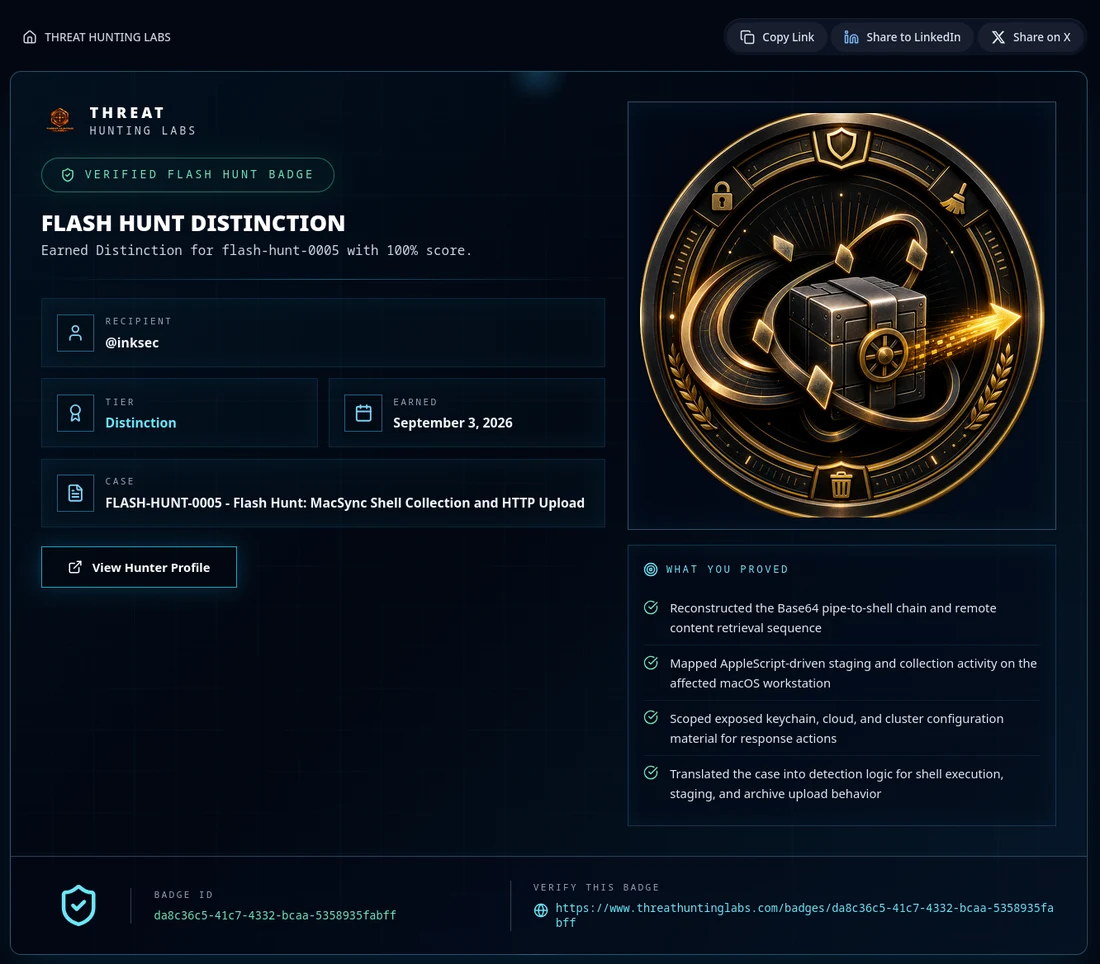
Verify: https://www.threathuntinglabs.com/badges/da8c36c5-41c7-4332-bcaa-5358935fabff